
Capabilities
Structure types, seismic systems, analysis and codes.
Performance-based design
Performance-based seismic design (PBSD) sets explicit performance objectives (continued operation, immediate occupancy, life safety) and verifies them with nonlinear analysis of the real structure, in addition to code compliance.
For the owner, the outcome is an informed decision on acceptable damage, investment in performance and the expected state after the earthquake. For the architect, geometries the prescriptive method penalizes are justified by analysis.
Analysis in practice
Outputs from APE Ingeniería models: digital twins from laser point clouds, structural models with damage states, and finite elements calibrated with field instrumentation.
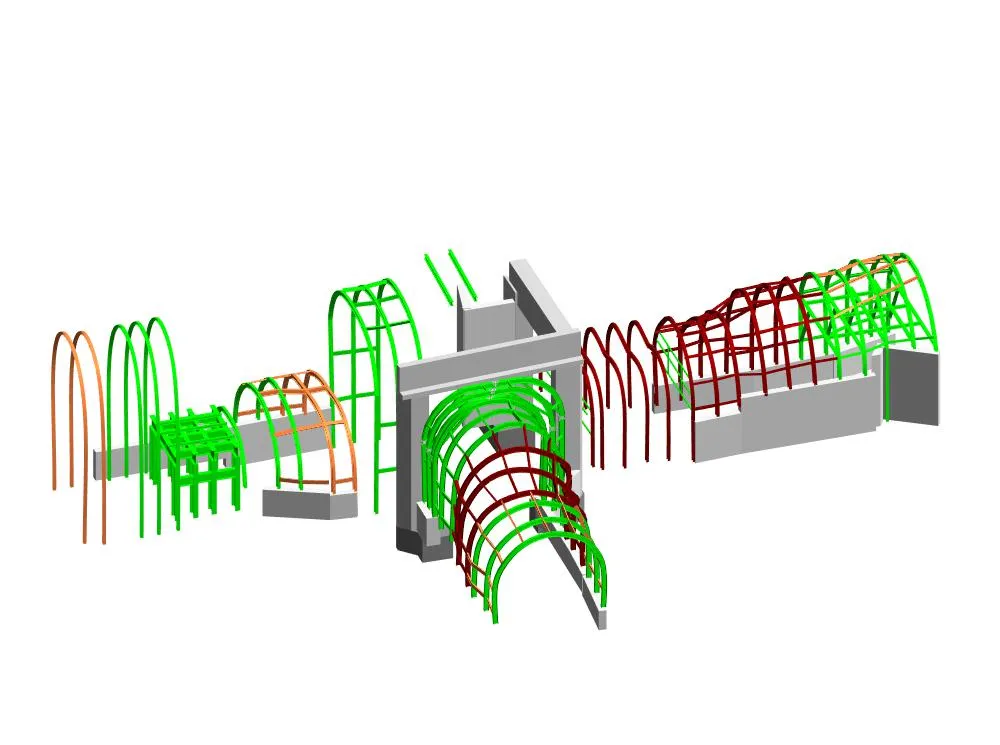
Structural model with damage states
Every element classified by damage level on the 3D model, the quantitative basis for prioritizing strengthening and intervention.
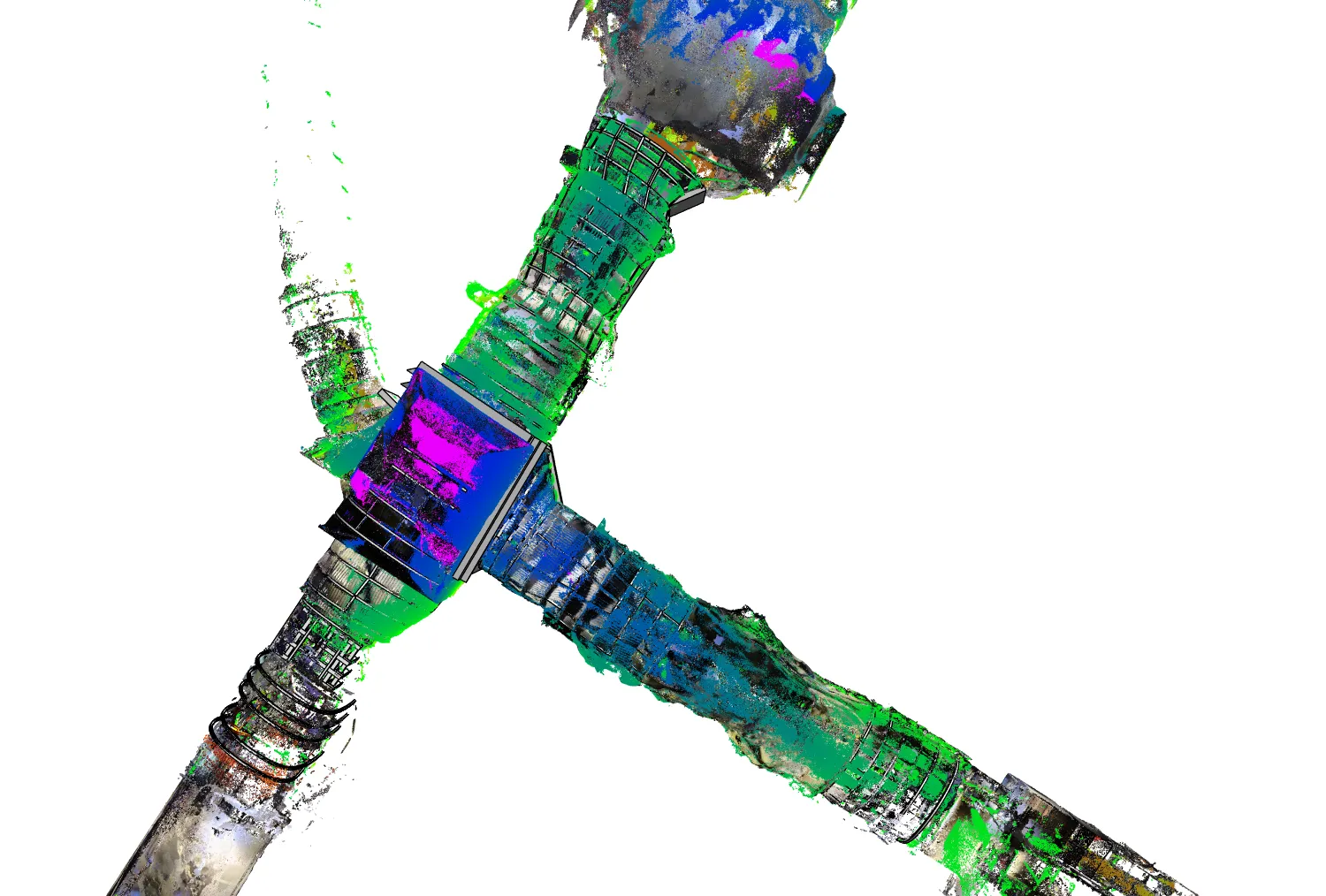
Digital twin from laser scanning
As-built geometry reconstructed from a point cloud, the basis for structural evaluation and detailed engineering.
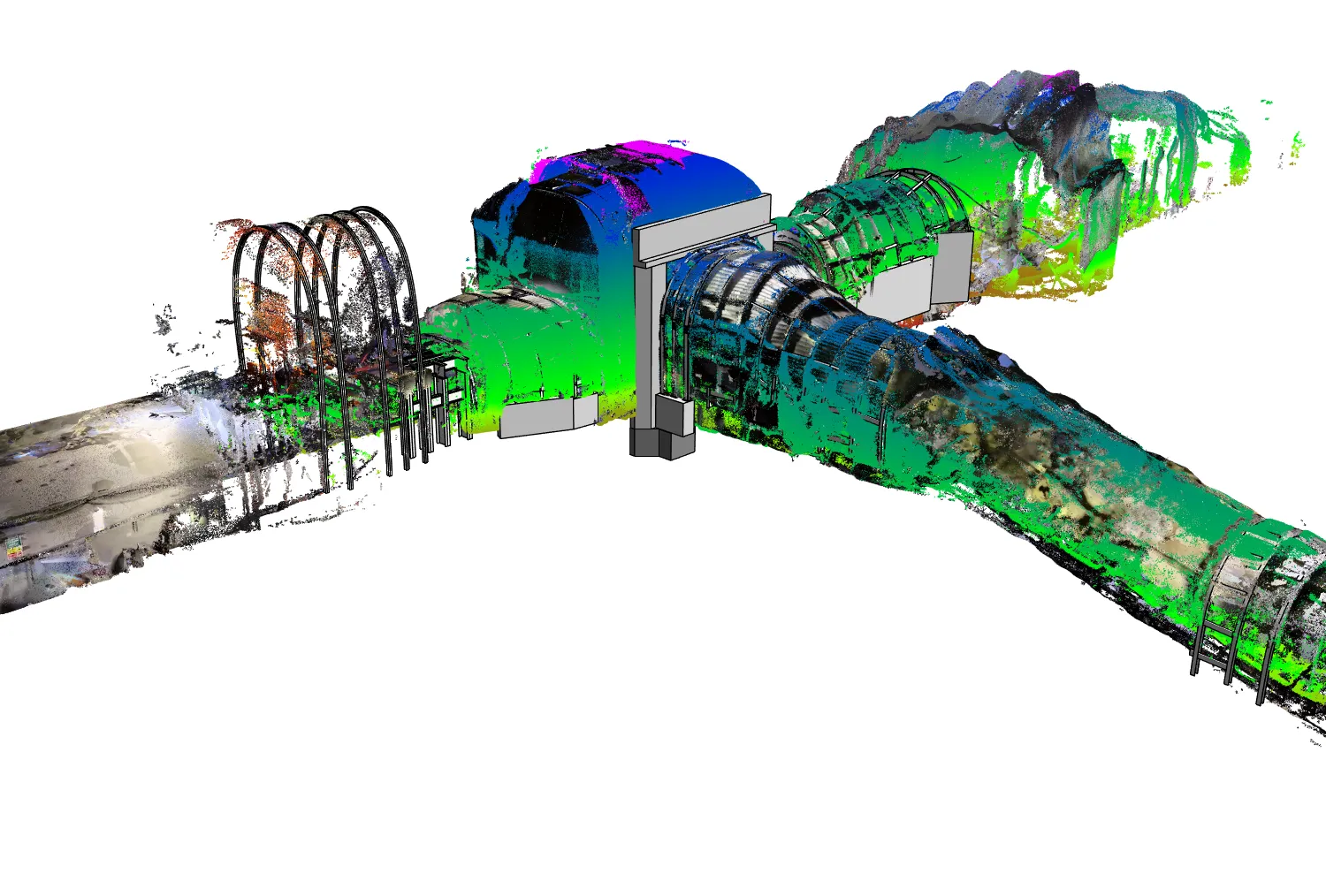
Reconstructing the real geometry
The existing structure measured to the millimeter. The analysis starts from the current geometry, without design assumptions.
In-house nonlinear analysis
Animations generated with APE Ingeniería finite-element models on OpenSees.
Analysis types
Analysis types
- Linear and nonlinear finite elements
- Linear static: pseudo-static and response spectrum
- Nonlinear static: pushover
- Nonlinear dynamic: time history
- Soil–structure interaction
- Equivalent linearization and capacity curve
- Forced-frequency harmonic: vibrations
- Linear buckling
Structure types
- Reinforced concrete
- Hot-rolled steel
- Cold-formed steel
- Composite structures
- Masonry
- Timber and guadua bamboo
Structural systems
- Ordinary and special moment frames
- Concentrically and eccentrically braced frames
- Dual systems and shear walls
- Seismic isolation
- Industrial buildings, silos and bridges
Industry & essential infrastructure
The same analytical depth applied to assets that cannot go out of service. An office capability, not a reference list.
Structural audit of existing infrastructure
As-built diagnosis with point clouds and a digital twin, damage mapping and interaction analysis, with the methods in section .02.
Seismic evaluation & retrofit
Evaluation of existing structures per ASCE 41-23 and FEMA P-58, from inspection to the retrofit design.
Industrial & containment structures
Industrial buildings, silos, tanks and liquid-containing structures (ACI 350), and bridges (AASHTO LRFD).
Codes & standards
Current editions applied in design and evaluation.
- ASCE/SEI 7-22
- AISC 360-22 · 341-22 · 358-22
- AISI S100-16
- ACI 318-25 · 350-20
- NEC-SE 2015
- AASHTO LRFD 2020
- ASCE/SEI 41-23
- FEMA P-58 · P-154 · P-2018
Complementary engineering
Integrated services for projects that require the building’s complete engineering.
Hydro-sanitary design
Hydraulic, sanitary, pumping and cistern design, plus hydrological and irrigation studies.
Fire protection systems
Fire-protection design coordinated with the architecture and local regulations.
Budgeting & unit prices
Unit-price analysis, productivity rates and construction schedules for the projects designed by the office.
Structural coordination from the concept phase of the project.
Request a proposal